William Wordsworth’s 19th century poem ‘Tintern Abbey’ explores the pleasures to be found in nature. As mature narrator, William Wordsworth, uses the power of memory and literary devices to view the Wyre Valley’s natural beauty. Techniques such as sibilance and metaphors aid in contrasting Wordsworth’s newfound perspective on nature with his attitudes to nature in his youth. Wordsworth also uses memory to compare this natural scene with the ‘din’ of the city where we can assume he also spent time, Wordsworth finally examines the deep pleasures of nature and it’s spiritual element – that is god, and his connection with nature and humanity. This is an element of the poem not aided by memory but instead reflects the social and historical context of the Romantic Era. To conclude Wordsworth shares his thoughts with his sister in an attempt to spiritually educate her.
The poem opens with a reference to time. The way the word ‘five’ is repeated emphasises that a period of time has passed but has not passed quickly, and suggests weariness in the narrator. The repetition also gives the opening a rolling rhythm, which is echoed in the ‘rolling’ waters and their ‘soft inland murmur’. This section concentrates on images of restfulness and peace. Wordsworth continues to use vivid imagery to describe the Wyre Valley. The view he describes is that of ‘pastoral farms’ and the imagery is very domestic. The ‘plots of cottage-ground’ and their ‘orchard-tuffs’ suggest smallness and neatness; the green colour of the landscape suggests fertile land suited to agriculture. Finally the sibilance in’ wreaths of smoke… sent up in silence’ allows a visual aid of smoke as the movement echoes the visual action of smoke. This emphasizes the presence of humans in nature, a common theme in ‘Tintern Abbey’.
Wordsworth argues that a ‘quiet eye’ can only be achieved by the mature individual, rather than someone of restless youth. The comparison begins when a younger version of Wordsworth is introduced {His sister}, and with it the idea of change. Her youth is emphasised as she reminds him of ‘former pleasures’ in her ‘wild eyes’. The repetition of the adjective wild is often used to describe her – this illustrates the juxtaposition of the two states of maturity. Wordsworth states that he was once like a ‘roe’, energetically leaping about the countryside but not really engaging with nature on a spiritual level. As an older man, this is what he now sees as important. Wordsworth uses the phrase “elevated thoughts’ when describing his mature view of the countryside. This communicates the epitomy of Wordsworth’s poem and that of many literary pieces written in the Romantic era.
Victor Hugo was a French poet, playwright, novelist, essayist, visual artist, diplomat, human rights campaigner, and one of the greatest writers of all time. His best-known works are the novels Les Misérables and Notre-Dame de Paris.
Victor-Marie Hugo was born on February 26, 1802 in Besançon, France. He was the third and last son of Joseph Léopold Sigisbert Hugo and Sophie Trébuchet. His brothers were Abel Joseph Hugo and Eugène Hugo.
After his parent’s separation, he lived with his mother in Paris. He attended the Lycée Louis-le Grand there. During this time, he developed a passion for writing. This passion would remain with him throughout the rest of his life.
Victor Hugo fell in love with his childhood friend Adèle Foucher. The two became secretly engaged because Victor’s mother disapproved Adèle. After his mother’s death, Hugo felt he was free to marry whomever he wanted to marry. The two married in 1822. They had their first child Léopold in 1823, but the child in infancy. The couple had four other children. Léopoldine was born on August 28, 1842; Charles was born on November 4, 1826; François- Victor was born on October 28, 1828; and Adèle was born on August 24, 1830.
Most of the writers of Victor Hugo’s generation were experimenting with the literary movement of Romanticism. Hugo was influenced by the famous figure of this movement, François- René de Chateaubriand. His works were profound and were heavily filled with passion. He wrote about experiences he had.
Because of his passion and eloquent writing style, his early work brought him fame and fortune. His first collection of poetry was Nouvelles Odes et Poésies Diverses that was published in 1824. Louis XVIII recognized Hugo and gave him a royal pension. Two years later, he published Odes et Ballades in 1826. In this set of poetry, Hugo was recognized for being a great poet, and natural lyricist.
Victor Hugo published his first novel, Han d'Islande, in 1823. He published his second novel, Bug-Jargal, in 1826. Between 1829 to 1840, he published five more volumes of poetry, which were the following: Les Orientales, Les Feuilles d‘Automne, Les Chants du Crépuscule, Les Voix Intérieures, and Les Rayons et Les Ombres.
His first mature work was published in 1829. Le Dernier Jour d'un Condamné has had a profound influence on writers including Albert Camus and Charles Dickens. Hugo’s first full-length novel was Notre-Dame de Paris in 1831. The novel was enormously successful in Europe. It was quickly translated into other languages. The novel also attracted thousands of tourists to the Cathedral of Notre Dame because that was the setting of the novel.
In the 1830s, Hugo began planning to write a novel about social misery and injustice. It took him seventeen years to complete his most profound work, Les Misérables. It was finally published in 1862. The book was sold in installment. The first installments of the books sold out within hours. The book had an enormous on French society.
In his next novel, Les Travailleurs de la Mer, Victor turned away from social and political issues. The novel was well received because of Hugo’s popularity and the success of the first book. In his next novel, L'Homme Qui Rit, he returned to writing about political and social issues. This book painted a picture of the aristocracy. However, this book was not as successful as the others were. His last novel, Quatrevingt-treize, was published in 1874. This novel was different then all others because the subject was Reign of Terror during the French Revolution.
Many people are not aware of this, but Victor Hugo was also a talent artist. He produced more than 4,000 drawings during the course of his life. At first, this was a hobby for Hugo, but it eventually became another way to vent his feelings.
He kept his artwork out of the public eye because he feared it would overshadow his literary work. However, he enjoyed sharing his drawings with his family and friends. He sometimes would give his artwork as gifts. Some of his work was shown to Van Gogh and Delacroix. The two said if he had become a painter instead of a writer, he would have outshone the artists of their century.
In 1841, Hugo was elected to the Académie française. Afterwards, he became increasingly involved in French politics. He was a supporter of the Republic form of government. He entered the Higher Chamber as a pair de France, where he spoke against the death penalty and social injustice, and in favor of freedom of the press and self-government for Poland. In 1848, he was elected to the Legislative Assembly and the Constitutional Assembly.
In 1851, when Napoleon III seized complete power and established an anti-parliamentary constitution, Hugo declared him a traitor of France. After speaking out, he fled to Brussels, then Jersey, and finally settled with his family on the channel island of Guernsey at Hauteville House. He lived in exile until1870.
Victor Hugo had a great impact on the music world. His works have inspired people from the 1800s until the present day and have helped create over one thousand musical compositions. Some of the plays that are result of Hugo’s inspiration are the following: Rigoletto, Ernani, La Gioconda, Notre-Dame de Paris, Les Misérables, and Lucrezia Borgia.
When Hugo returned to Paris in 1870, the country hailed him as a national hero. Within a brief period, he suffered a mild stroke. His daughter Adèle’s was put in an insane asylum, and he two sons died. His other daughter, Léopoldine, had drowned in a boating accident in 1843, and his wife Adèle had died in 1868.
Despite his personal loss, Hugo remained committed to the cause of political change. On 30 January 1876, Hugo was elected to the newly created Senate. His last years in politics were a failure. He did not accomplish anything.
In February of 1881, Hugo celebrated his 79th birthday. To honor the fact that he was entering his eightieth year, there was a celebration. The celebrations began on the 25th when Hugo was presented with a Sèvres vase, the traditional gift for sovereigns. On the 27th, one of the largest parades in French history was held. Marchers stretched from Avenue d'Eylau, down the Champs-Elysees, and all the way to the center of Paris. The marchers marched for six hours to pass Hugo as he sat in the window at his house.
On May 22, 1885, at the age of 83, Victor Hugo died. The cause of death was old age. He was not only remembered as a prominent figure in French literature, but also internationally as a diplomat who had helped preserve and shape the Third Republic and democracy in France. More than two million people joined his funeral procession in Paris from the Arc de Triomphe to the Panthéon, where he is buried.
Today, Hugo’s work continues to be popular. His works continue to be inspirations for playwrights and musicians. One of the biggest blockbuster musicals is Les Misérables, which is based on his book, remains popular. In 1996, Disney created an animated film based on his book, Notre-Dame de Paris. Hugo’s novel against capital punishment, Le Dernier Jour d'un Condamné, has recently been adapted into an opera by David Alagna (libretto by Frédérico Alagna). Their brother, tenor Roberto Alagna, performed in the opera’s premiere in Paris in the summer of 2007 and again in February 2008 in Valencia with Erwin Schrott as part of the Festival international Victor Hugo et Égaux 2008.
Victor-Marie Hugo was born on February 26, 1802 in Besançon, France. He was the third and last son of Joseph Léopold Sigisbert Hugo and Sophie Trébuchet. His brothers were Abel Joseph Hugo and Eugène Hugo.
After his parent’s separation, he lived with his mother in Paris. He attended the Lycée Louis-le Grand there. During this time, he developed a passion for writing. This passion would remain with him throughout the rest of his life.
Victor Hugo fell in love with his childhood friend Adèle Foucher. The two became secretly engaged because Victor’s mother disapproved Adèle. After his mother’s death, Hugo felt he was free to marry whomever he wanted to marry. The two married in 1822. They had their first child Léopold in 1823, but the child in infancy. The couple had four other children. Léopoldine was born on August 28, 1842; Charles was born on November 4, 1826; François- Victor was born on October 28, 1828; and Adèle was born on August 24, 1830.
Most of the writers of Victor Hugo’s generation were experimenting with the literary movement of Romanticism. Hugo was influenced by the famous figure of this movement, François- René de Chateaubriand. His works were profound and were heavily filled with passion. He wrote about experiences he had.
Because of his passion and eloquent writing style, his early work brought him fame and fortune. His first collection of poetry was Nouvelles Odes et Poésies Diverses that was published in 1824. Louis XVIII recognized Hugo and gave him a royal pension. Two years later, he published Odes et Ballades in 1826. In this set of poetry, Hugo was recognized for being a great poet, and natural lyricist.
Victor Hugo published his first novel, Han d'Islande, in 1823. He published his second novel, Bug-Jargal, in 1826. Between 1829 to 1840, he published five more volumes of poetry, which were the following: Les Orientales, Les Feuilles d‘Automne, Les Chants du Crépuscule, Les Voix Intérieures, and Les Rayons et Les Ombres.
His first mature work was published in 1829. Le Dernier Jour d'un Condamné has had a profound influence on writers including Albert Camus and Charles Dickens. Hugo’s first full-length novel was Notre-Dame de Paris in 1831. The novel was enormously successful in Europe. It was quickly translated into other languages. The novel also attracted thousands of tourists to the Cathedral of Notre Dame because that was the setting of the novel.
In the 1830s, Hugo began planning to write a novel about social misery and injustice. It took him seventeen years to complete his most profound work, Les Misérables. It was finally published in 1862. The book was sold in installment. The first installments of the books sold out within hours. The book had an enormous on French society.
In his next novel, Les Travailleurs de la Mer, Victor turned away from social and political issues. The novel was well received because of Hugo’s popularity and the success of the first book. In his next novel, L'Homme Qui Rit, he returned to writing about political and social issues. This book painted a picture of the aristocracy. However, this book was not as successful as the others were. His last novel, Quatrevingt-treize, was published in 1874. This novel was different then all others because the subject was Reign of Terror during the French Revolution.
Many people are not aware of this, but Victor Hugo was also a talent artist. He produced more than 4,000 drawings during the course of his life. At first, this was a hobby for Hugo, but it eventually became another way to vent his feelings.
He kept his artwork out of the public eye because he feared it would overshadow his literary work. However, he enjoyed sharing his drawings with his family and friends. He sometimes would give his artwork as gifts. Some of his work was shown to Van Gogh and Delacroix. The two said if he had become a painter instead of a writer, he would have outshone the artists of their century.
In 1841, Hugo was elected to the Académie française. Afterwards, he became increasingly involved in French politics. He was a supporter of the Republic form of government. He entered the Higher Chamber as a pair de France, where he spoke against the death penalty and social injustice, and in favor of freedom of the press and self-government for Poland. In 1848, he was elected to the Legislative Assembly and the Constitutional Assembly.
In 1851, when Napoleon III seized complete power and established an anti-parliamentary constitution, Hugo declared him a traitor of France. After speaking out, he fled to Brussels, then Jersey, and finally settled with his family on the channel island of Guernsey at Hauteville House. He lived in exile until1870.
Victor Hugo had a great impact on the music world. His works have inspired people from the 1800s until the present day and have helped create over one thousand musical compositions. Some of the plays that are result of Hugo’s inspiration are the following: Rigoletto, Ernani, La Gioconda, Notre-Dame de Paris, Les Misérables, and Lucrezia Borgia.
When Hugo returned to Paris in 1870, the country hailed him as a national hero. Within a brief period, he suffered a mild stroke. His daughter Adèle’s was put in an insane asylum, and he two sons died. His other daughter, Léopoldine, had drowned in a boating accident in 1843, and his wife Adèle had died in 1868.
Despite his personal loss, Hugo remained committed to the cause of political change. On 30 January 1876, Hugo was elected to the newly created Senate. His last years in politics were a failure. He did not accomplish anything.
In February of 1881, Hugo celebrated his 79th birthday. To honor the fact that he was entering his eightieth year, there was a celebration. The celebrations began on the 25th when Hugo was presented with a Sèvres vase, the traditional gift for sovereigns. On the 27th, one of the largest parades in French history was held. Marchers stretched from Avenue d'Eylau, down the Champs-Elysees, and all the way to the center of Paris. The marchers marched for six hours to pass Hugo as he sat in the window at his house.
On May 22, 1885, at the age of 83, Victor Hugo died. The cause of death was old age. He was not only remembered as a prominent figure in French literature, but also internationally as a diplomat who had helped preserve and shape the Third Republic and democracy in France. More than two million people joined his funeral procession in Paris from the Arc de Triomphe to the Panthéon, where he is buried.
Today, Hugo’s work continues to be popular. His works continue to be inspirations for playwrights and musicians. One of the biggest blockbuster musicals is Les Misérables, which is based on his book, remains popular. In 1996, Disney created an animated film based on his book, Notre-Dame de Paris. Hugo’s novel against capital punishment, Le Dernier Jour d'un Condamné, has recently been adapted into an opera by David Alagna (libretto by Frédérico Alagna). Their brother, tenor Roberto Alagna, performed in the opera’s premiere in Paris in the summer of 2007 and again in February 2008 in Valencia with Erwin Schrott as part of the Festival international Victor Hugo et Égaux 2008.

ok, me and Jolanta finished the presentation this after, adding some of your notes....
I will be sending it by email, so you can have a read through a present it tomorrow,
one last update, on my voice it is still the same, and muscular pains are coming also, even though, I may not be able to speak I will be there in person :) hopefully :S
I will be sending it by email, so you can have a read through a present it tomorrow,
one last update, on my voice it is still the same, and muscular pains are coming also, even though, I may not be able to speak I will be there in person :) hopefully :S

Figure 1: Derby, Joseph Wright of, 1773,The Hermit Studying Anatomy. Found at:
http://www.tms.org/pubs/journals/JOM/0706/fig6.jpg (Accessed on 17/02/10)
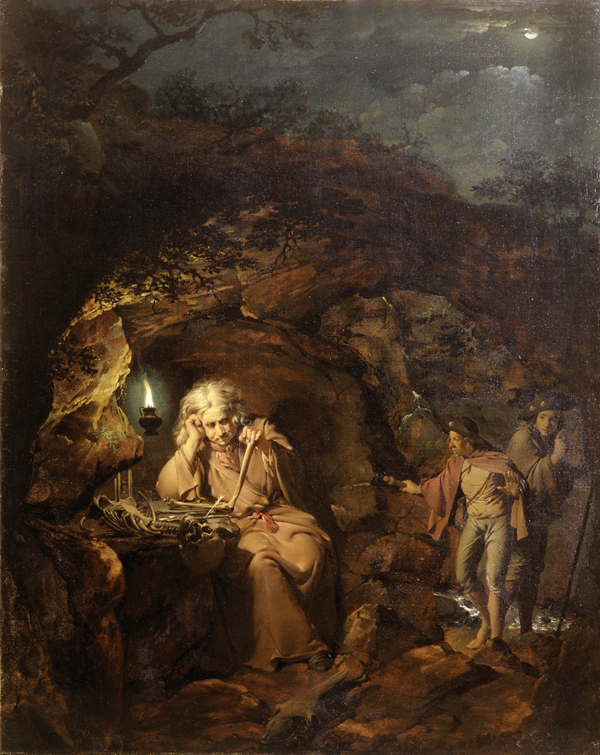
Illustration list:
Slave Ship
http://www.chrishankey.co.uk/news/wp-content/uploads/2008/08/JMW%20Turner%20Slave%20Ship%20Slavers%20Throwing%20Overboard%20the%20Dead%20and%20Dying%20Typhoon%20Coming%20On%201840.jpg
(accessed on Augest 11th 2008)
All Star Trek/X-Men/Transformers concept art
http://www.jamesclyne.com/
(Last accessed on May 26th 2009)
William Turner Portrait
http://upload.wikimedia.org/wikipedia/commons/c/cd/Joseph_Mallord_William_Turner_083.jpg (Accessed on May 21st 2005)
Calais Pier
http://upload.wikimedia.org/wikipedia/commons/e/e2/Joseph_Mallord_William_Turner_024.jpg (Accessed on May 21 2005)
Chichester Canal
http://upload.wikimedia.org/wikipedia/commons/5/52/Chichester_canal_jmw_turner.jpeg
(Accessed 7 April 2009)
Rain, Steam and Speed
http://upload.wikimedia.org/wikipedia/commons/3/35/Rain_Steam_and_Speed_the_Great_Western_Railway.jpg (accessed on July 25th 2006)
The Shipwreck of the Minotaur
http://upload.wikimedia.org/wikipedia/commons/2/2e/Shipwreck_turner.jpg
(Accessed on June 27 2006)
The Fighting Temeraire tugged to her last Berth to be broken
http://upload.wikimedia.org/wikipedia/commons/9/94/Turner%2C_J._M._W._-_The_Fighting_T%C3%A9m%C3%A9raire_tugged_to_her_last_Berth_to_be_broken.jpg
(accessed July 23rd 2009)
And I believe thats it.
Slave Ship
http://www.chrishankey.co.uk/news/wp-content/uploads/2008/08/JMW%20Turner%20Slave%20Ship%20Slavers%20Throwing%20Overboard%20the%20Dead%20and%20Dying%20Typhoon%20Coming%20On%201840.jpg
(accessed on Augest 11th 2008)
All Star Trek/X-Men/Transformers concept art
http://www.jamesclyne.com/
(Last accessed on May 26th 2009)
William Turner Portrait
http://upload.wikimedia.org/wikipedia/commons/c/cd/Joseph_Mallord_William_Turner_083.jpg (Accessed on May 21st 2005)
Calais Pier
http://upload.wikimedia.org/wikipedia/commons/e/e2/Joseph_Mallord_William_Turner_024.jpg (Accessed on May 21 2005)
Chichester Canal
http://upload.wikimedia.org/wikipedia/commons/5/52/Chichester_canal_jmw_turner.jpeg
(Accessed 7 April 2009)
Rain, Steam and Speed
http://upload.wikimedia.org/wikipedia/commons/3/35/Rain_Steam_and_Speed_the_Great_Western_Railway.jpg (accessed on July 25th 2006)
The Shipwreck of the Minotaur
http://upload.wikimedia.org/wikipedia/commons/2/2e/Shipwreck_turner.jpg
(Accessed on June 27 2006)
The Fighting Temeraire tugged to her last Berth to be broken
http://upload.wikimedia.org/wikipedia/commons/9/94/Turner%2C_J._M._W._-_The_Fighting_T%C3%A9m%C3%A9raire_tugged_to_her_last_Berth_to_be_broken.jpg
(accessed July 23rd 2009)
And I believe thats it.

 A Comparison:
Just looking at the two images you see the comparison. The way the vast structures loom in the background, the way the light etches over the environment. There's also a significant portion of both images where there is the source of light and where there is darkness. With the concept art, the structure looms under a canvas of rocks as the sunlight drapes into the structure. Turners work is similar (but a lot more classic). The slave ship sits in the distance, once again in the dark. The only difference is that the light source is in the center of the image. Turner was labeled as 'the painter of light' and it shows in his work. The main comparison between the two is defiantly the use of light.
As you know we were able to almost finish our presentation the only thing missing is really compare the 2 works , historical and contemporary.
So based on the artists you research
Earl- William turner in comparison to concept art of nowadays
AJ- Victor Hugo in comparison to a contemporary writer
Ruben- Beethoven in comparison with soundtrack of star trek, and Illustration List.
Jolanta- Bibliography
Elliot- just post something related to your artist.
Mainly, you will use what you learned from your research and just compare them 2. A couple of sentences As, I did with beethoven. explaining how you can see influence in their works. And that's it everything is at its last days and everything is going ok together, I will meet Jolanta tomorrow at 10.30 and we go through the presentation and we email it to you so you can "study" it for the presentation.
Earl- just post the 2 examples you think can be related. I have 2 you can use them or not, it's up to you.


give me the websites and the name of the paintings etc. for the Illustration list.
So based on the artists you research
Earl- William turner in comparison to concept art of nowadays
AJ- Victor Hugo in comparison to a contemporary writer
Ruben- Beethoven in comparison with soundtrack of star trek, and Illustration List.
Jolanta- Bibliography
Elliot- just post something related to your artist.
Mainly, you will use what you learned from your research and just compare them 2. A couple of sentences As, I did with beethoven. explaining how you can see influence in their works. And that's it everything is at its last days and everything is going ok together, I will meet Jolanta tomorrow at 10.30 and we go through the presentation and we email it to you so you can "study" it for the presentation.
Earl- just post the 2 examples you think can be related. I have 2 you can use them or not, it's up to you.


give me the websites and the name of the paintings etc. for the Illustration list.
Subscribe to:
Posts (Atom)